





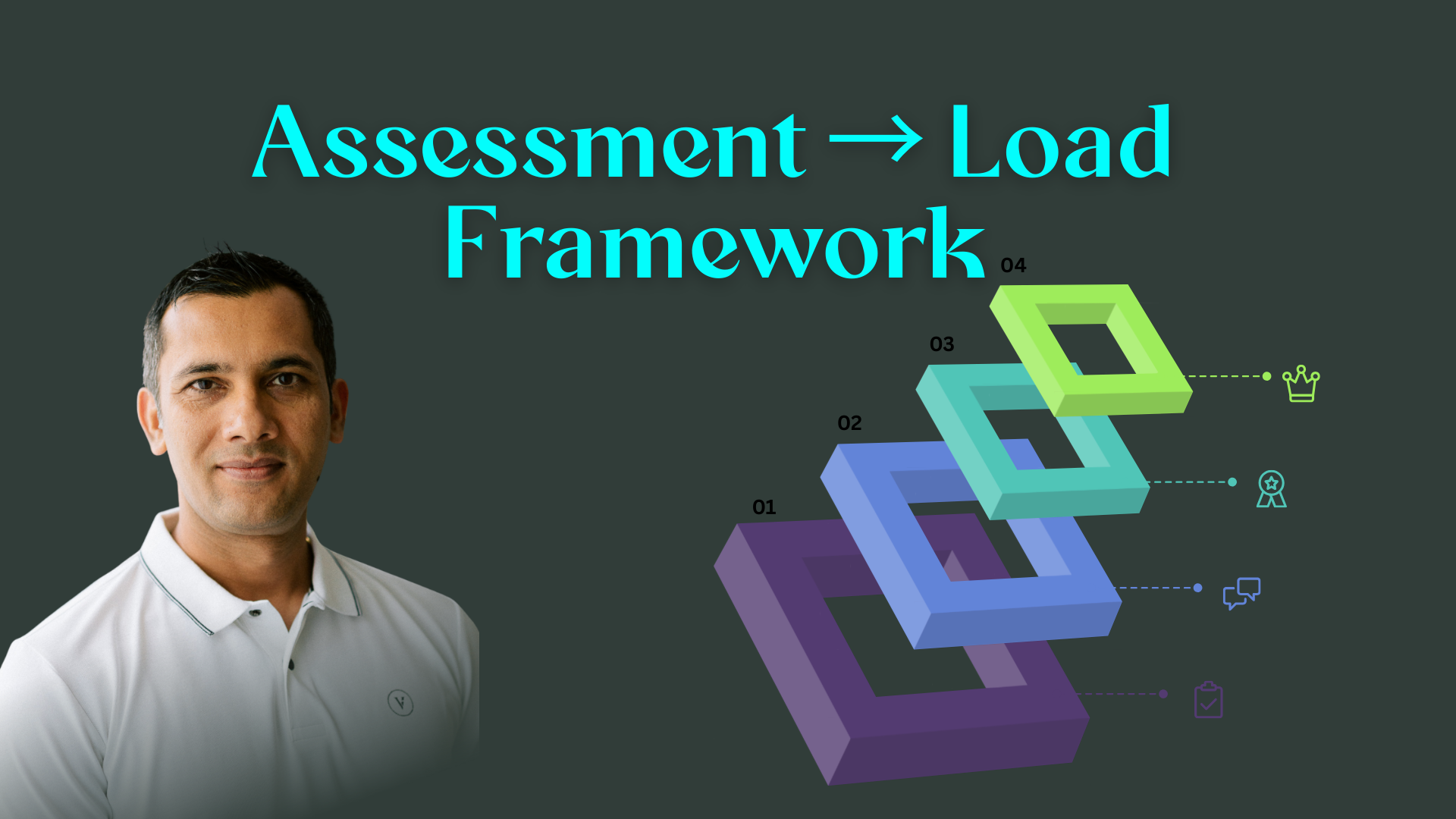
Assessment → Load Framework
About This Course
The Assessment → Load Framework is designed to solve one of the most common problems instructors face: when and how to increase demand without triggering compensation.
Many movement professionals rely on load—more repetitions, resistance, complexity, or intensity—to drive progress. But without a clear decision-making process, load often exposes instability, reinforces poor strategies, or escalates effort instead of improving organisation.
This framework reframes load as a test, not a solution.
Building on the logic of Posture → Priority and Assessment, this framework teaches you how to determine whether a body is ready to adapt or merely endure. Load is introduced only after priority has been clarified and assessment has confirmed that the body can organise itself effectively in movement.
Rather than asking “How do I make this harder?”, the framework trains you to ask:
- What kind of demand can this body integrate today?
- Does added load improve organisation—or increase compensation?
- Is the nervous system learning, or just surviving?
You’ll learn how different forms of load—such as leverage, speed, range, duration, resistance, and complexity—differently affect organisation. The framework shows you how to progress by adjusting one load variable at a time, allowing the body to adapt without losing structure, breath, or coordination.
A central principle anchors the entire framework:
If the organisation improves under demand, the load is teaching.
If demand increases compensation, the load has been introduced too early.
This approach leads to calmer sessions, clearer teaching decisions, and more sustainable progress—whether you’re working one-on-one or teaching groups. Instead of forcing results, you learn to respect readiness and use load to reveal, refine, and reinforce organisation.
The Assessment → Load Framework completes the decision loop, allowing instructors to progress movement with confidence, precision, and restraint.
Prerequisites
We recommend completing the prerequisites for more effective learning.


Dr. Abhishek Agrawal
Related Courses
Explore newly published courses and stay updated.
Curriculum Overview
This course includes 1 modules, 5 lessons, and 0 hours of materials.
Introduces load as a test of organisation, not a tool for forcing progress. Clarifies why load must follow posture, priority, and assessment.
Expands the definition of load beyond resistance to include speed, leverage, range, complexity, duration, and attention.
Teaches how to observe effort, breath, coordination, and substitution patterns once demand is introduced.
Shows how to progress movement by refining organisation instead of increasing intensity or effort.
Demonstrates how to apply the framework in 1:1 sessions and group classes while maintaining clarity and control.
Course Specifications
Subscribe to Our Newsletter


Popular Categories
Teacher Training Continue Education Clinical Problem Solving Training Resources Studio
Reply to Comment