


Yoga Anatomy Course: Explore the Body-Mind Connection in Yoga
What Will You Learn?
About This Course
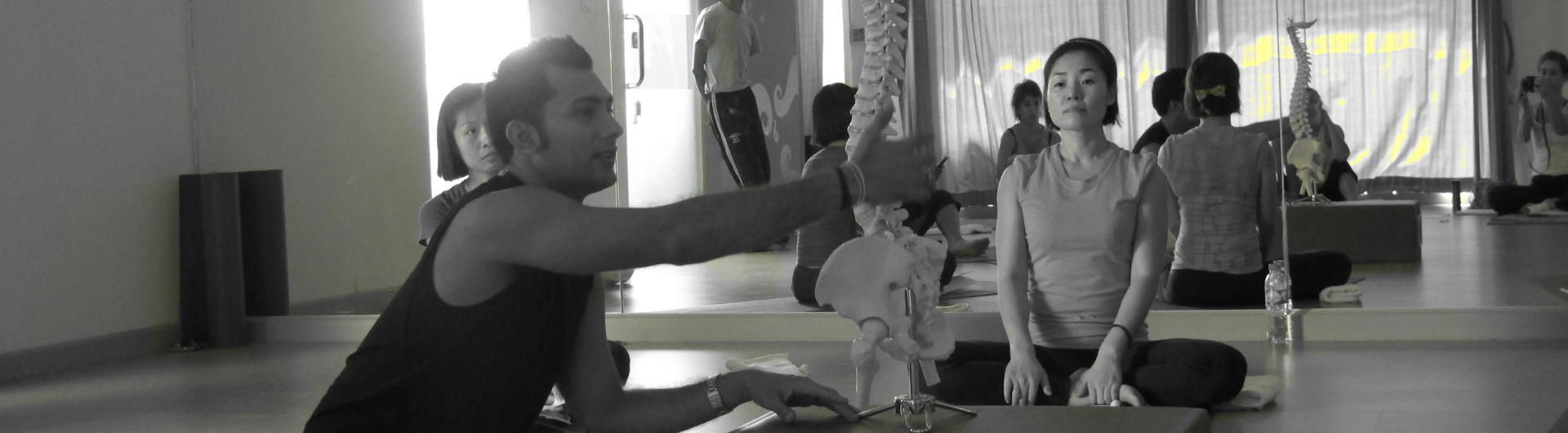
This 10-hour Anatomy, Physiology, and Biomechanics module combines 10 hours of expert-led classroom or virtual sessions with Dr Abhishek Agrawal.
Designed specifically for yoga teachers, the module builds a practical understanding of the human body, including joint mechanics, muscle actions, stretching principles, and common physical limitations. The focus is on applying anatomy in real teaching situations, helping you cue more clearly, adapt practices safely, and respond appropriately to different bodies.
You will also develop the discernment to recognise when a student needs further support or referral to another professional, strengthening both your teaching confidence and professional responsibility.
Requirements

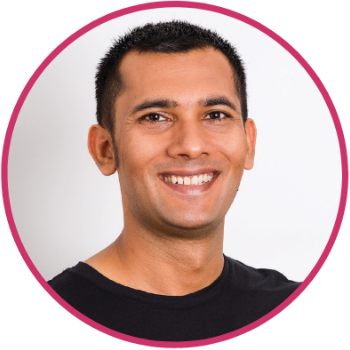
Dr. Abhishek Agrawal
Curriculum Overview
This course includes 7 modules, 24 lessons, and 0 hours of materials.
This chapter covers the structure and function of cells, body organization, and the roles of the 11 organ systems in our body.
The chapter introduces the integumentary, skeletal, muscular, and nervous systems collectively known as the structural systems. Gain knowledge about individual bones and joints, their locations, and available movements.
The chapter covers the anatomy & functions of the circulatory, respiratory, digestive, and urinary systems collectively known as the organ systems. You will learn how to recognize the organs that are linked to the organelle systems of the body and understand functions and the effects on other systems of the body.
The chapter covers the anatomy & functions of the Endocrine, immune, and digestive systems collectively known as the glandular system. You will learn how to recognize the organs that are linked to the glandular system of the body and understand the functions and interrelation with the other system of the body.
Femur (thighs), Tibia + Fibula (lower legs), Calcaneus (heels), Metatarsal (mid-foot arches), Phalyngeal (toes)
The quadriceps group of muscles are located on the front of the thigh. They consist of four distinct muscles: the rectus femoris, the vastus lateralis, the vastus intermedius, and the vastus medialis.
The adductors group of muscles are located on the inner thigh. They consists of adductor longus, adductor brevis, adductor magnus, and gracillis.
The gluteal group of muscles forms the buttocks. Thery consists of the gluteus maximus, gluteus medius, and gluteus minimus.
The hamstring group of muscles are located on the back of the thigh. They consist of the biceps femoris, semitendinosus and semimembranosus.
Located on the back of the leg, the calf muscle consists of gastrocnemius and soleus.
Scapula (shoulder blade), Humerus (upper arm), Redius + Ulna (forearm bone), Metacarpal (palms), Phalyngeal (fingers)
The Deltoid muscle is a large triangular-shaped muscle covering the shoulder joint giving the shoulder its rounded contour. Its comprised of three parts Anterior, Middle and Lateral.
The Pectoral muscle is a large triangular-shaped muscle making up the chest area. It is comprised of two parts Pectoralis minor (deep) and Pectoralis major (superficial).
The trapezius muscle is a large superficial back muscle that resembles a trapezoid. It is comprised of the Upper, Middle and Lower trapezius.
The Biceps muscle is located in the front portion of the upper arm.
The Triceps muscle is located in the back portion of the upper arm.
Quiz Certificate
Course Specifications
Subscribe to Our Newsletter


Popular Categories
Teacher Training Continue Education Clinical Problem Solving Training Resources Studio
Reply to Comment